Property Description
Lower Blagrove Farm is a traditional Devon longhouse with a slate roof. Date of construction is unknown but assumed to be late 18th or early 19th century, possibly on the site of an earlier building.
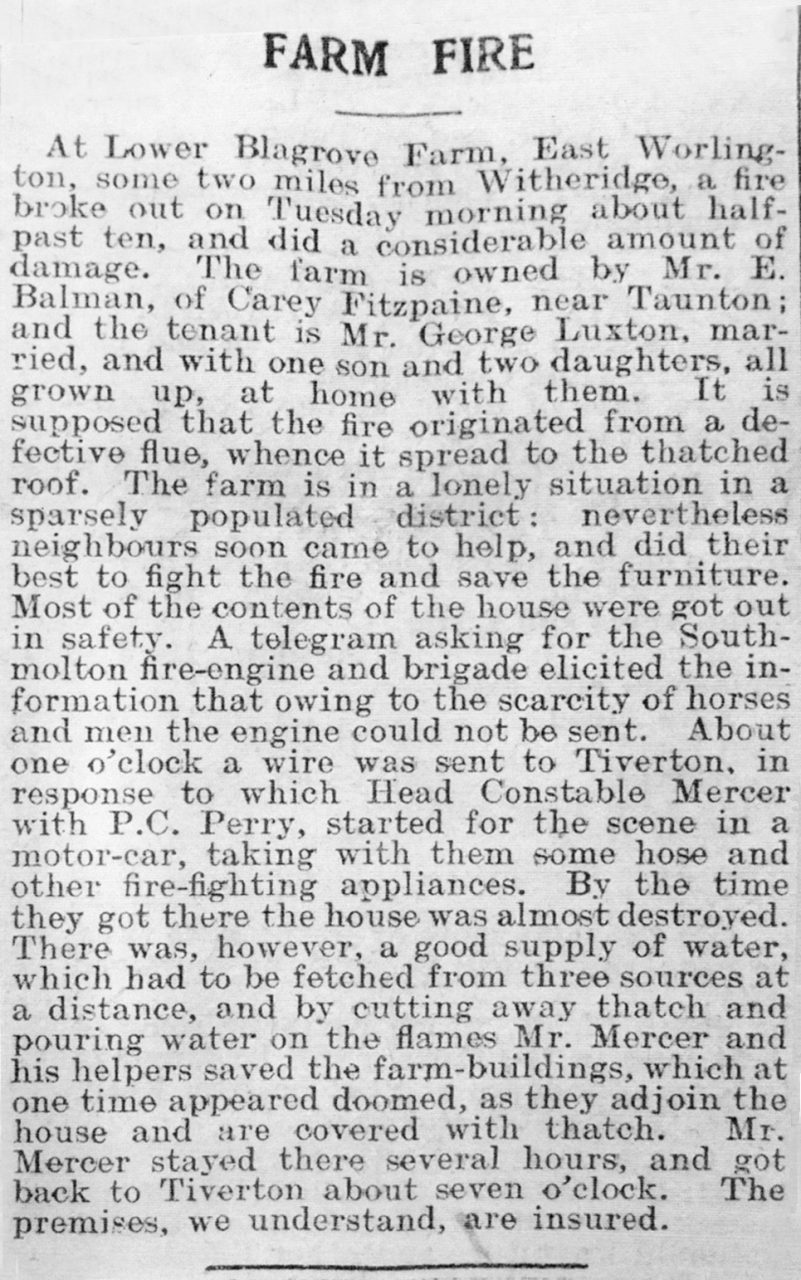
A fire in 1916 unfortunately destroyed much of the main house (see below) but the outbuildings were saved with help from Tiverton Police and neighbours. The nearby South Molton Fire Brigade were unable to attend due to a scarcity of horses and men: the presumption being that a large number of horses had been sent to the WWI Western Front,
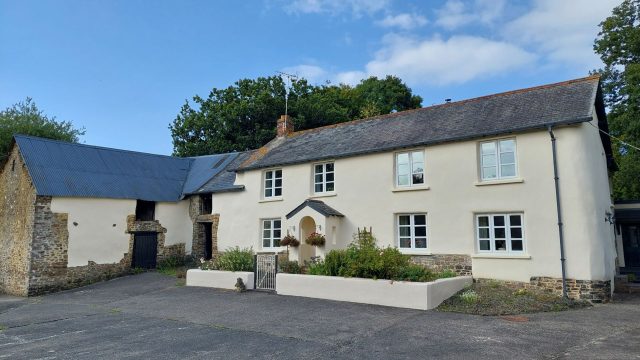
Unlike most similar properties in East Worlington Lower Blagrove Farm is not a listed building which is probably because it was rebuilt after the fire without a thatched roof and a large part above ground is not the original structure.
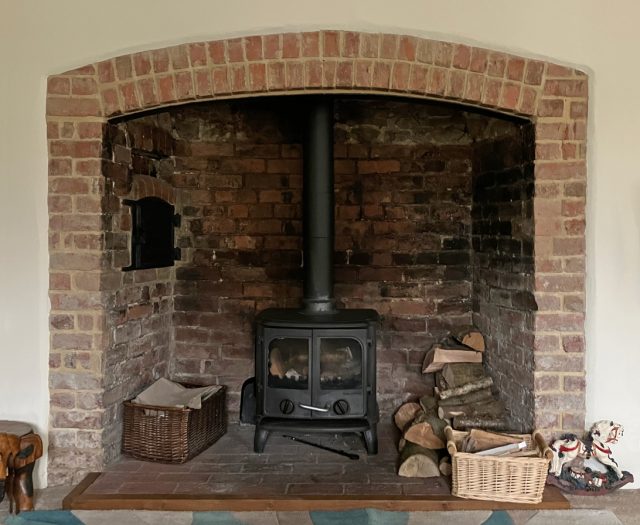
Of the original internal features only the inglenook fireplace and some scorched floorboards remain.
Newspaper Cuttings
Farm Fire
This article from The Tiverton Gazette was published 11th April 1916. It is interesting for several reasons. The fire started from a faulty flue which spread to the thatch and highlights the perils of a thatch roof that exist to this day. The article enables the date of the construction of the current slate roof to be dated as it was almost certainly constructed during the summer of 1916.
It is also highlights how the First World War affected people in ways that we might not have thought of. Prior to 1914 about 1.5 million horses were employed on the land but over the course of the war about half a million horses were requisitioned by the War Office, many of which were taken from agricultural work. This obviously led to a shortage of horses and therefore none were available to drive the fire-engine from South Molton to East Worlington. So even if there had been firefighters available – and here the article is clear that there was a lack of men too – there was no way to get the fire-fighting equipment to the fire.
The hero of the day appears to have been the police constables who arrived by motor-car from Tiverton. Head Constable Mercer and with P.C. Perry came with hoses and other fire-fighting equipment and stayed for several hours fighting the fire and, even though the house was badly damaged, they helped to save the outbuildings.
Another a point of interest is the two telegrams sent to get try and get help. In this day of instant communications we can notice there would have been a significant delay in calling for assistance as it would have taken some time to send someone to the post office in East Worlington (now Oak Ash and Thorn) or Witheridge both of which are more than a couple of miles away from Lower Blagrove.
We know from the census records that the occupant of Lower Blagrove in 1916, George Luxton would have been in his mid 70’s and his wife was 79 or 80. By 1921 there is a different family (the Coles) in residence and we can speculate if the fire helped the Luxtons decide it was finally time to retire.