
Property Description
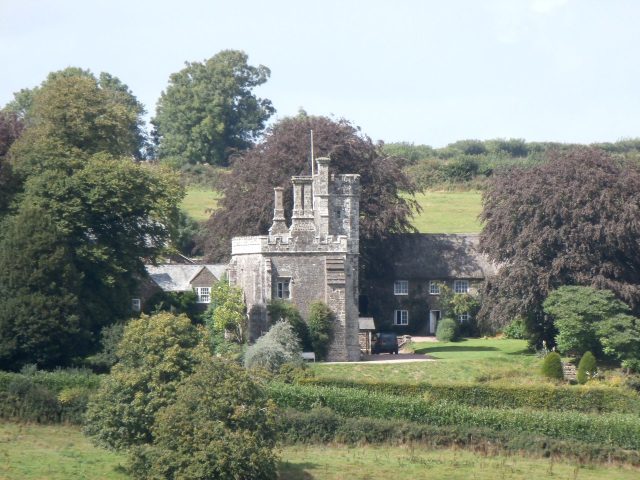
Affeton Castle and its surrounding estate lie above the wooded valley of the Little Dart, a tributary of the River Taw. Affeton Castle’s significance lies in the fact it is the only significant late medieval secular residence still left in this part of Devon.
Originally built in the fifteenth-century, Affeton Castle was once the gatehouse of a medieval fortified house. The house itself has sadly been lost in the intervening centuries.
Affeton Castle was sacked three times during the Civil War, and the remaining two-storey gatehouse was described in 1859 as a ruin*. Fortunately it was saved and substantially rebuilt in the 19th century to serve as a shooting lodge and now a family home.
Affeton Castle is a Grade II* listed building: for more details of the architectural history see entry on Historic England Website.
*T. H. Turner and J. H. Parker, Some Account of Domestic Architecture in England, III pt 2 (1859).
Location
Why was Affeton Castle Located Where it is?
- Vantage Point: The castle is situated on the [side of a high hill overlooking the Little Dart River valley. This elevated ridge line provided the Stucley family with panoramic sightlines to spot incoming raiders, rival forces, or travelers moving through Mid Devon long before they could reach the gates.
- The Moated Courtyard Defences: The gatehouse was positioned precisely to guard the entry point into a large [E-shaped, crenelated mansion. The layout relied on the castle to protect the inner courtyard, while the entire complex was [historically ringed by a deep defensive water moat
- Controlling Historical Trackways: The site sat near ancient Devon trackways that linked North Devon down to Tiverton. Placed at this bottleneck, the castle allowed the lord of the manor to control access, collect feudal dues, and assert territorial dominance over the local area.
- Resource Proximity: While built high enough for tactical defense, the location remained close enough to the [Little Dart valley slope to easily exploit natural springs and water catchment systems keeping the fort self-sufficient during a siege.
Stories
Building the Castle
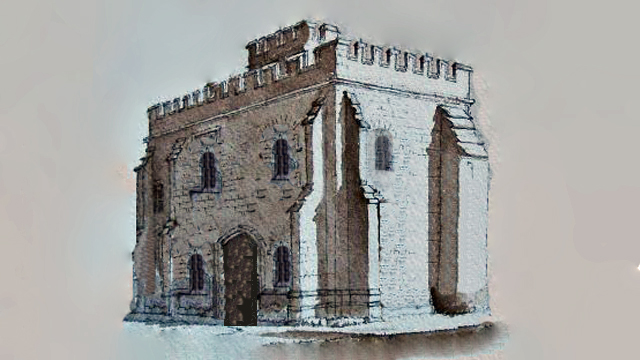
Affeton was almost certainly the location of a homestead for many centuries, but at the end of the 14th Century Thomas de Affeton decided to build a fortified manor house with an impressive gatehouse.
The manor house was in the shape of an “E” and sadly fell into ruin after being sacked during the English Civil War in 1645. The only part of the original manor house still standing is the gatehouse, and this is what is known as Affeton Castle today. There was also a moat and whilst not strictly a castle Affeton would have provided some significant protection to its inhabitants.
The English Civil War
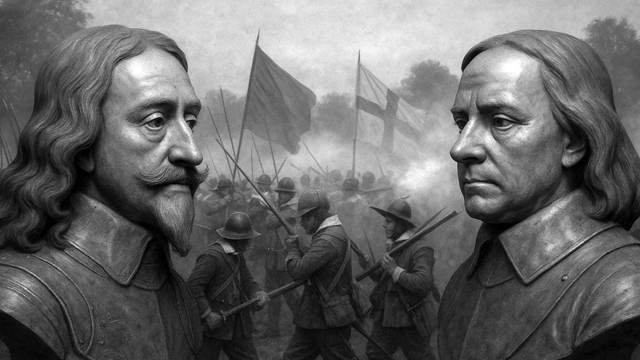
Thomas Stucley, the owner of Affeton during the Civil War, fought on the Royalist side and rose to the rank of colonel. Thus the manor became a target for Parliamentary forces. Unfortunately, the house also house also suffered attacks from the Royalists due to Sir Thomas’s brother Lewis being a chaplain to Oliver Cromwell. It is likely that the house suffered considerable damage and was almost certainly set on fire.
At the end of the Civil War, and despite declaring that he was in considerable debt, Thomas was fined £300 by Parliamentary Commissioners in Exeter for his part in the war. Upon the restoration of the monarchy, Thomas was knighted but received little, if any financial compensation So whilst the house was rebuilt it was on a much more modest scale. Only the gatehouse survived to indicate the status of the original buildings but this too fell into ruin over the following centuries.
A Timeline of Affeton Castle
Saxon Times
Origins of Affeton
End of 12th C
First Record of Occupation
1250-1300
Affeton Village and Church
1349-1351
Bubonic Plague
1350-1410
Thomas de Affeton & Elizabeth de Mannyngford
1377-1407
Fortified Manor House Built
With his increased income obtained through marriage Thomas de Affeton erected a fortified manor house which was in the shape of the letter “E”. By tradition the house was positioned in the orchard below the current buildings, known as Affeton Barton. But the location of the gatehouse , and evidence below ground suggests it probably occupied the site of the current buildings.
NEEDS PLAN or LINK TO IT
1404-1467
Katherine de Affeton
1439
Affeton Church
1645-1646
Civil War Destruction
Early 19th C
Castle in Ruins
1858-1868
Restoration of Gatehouse
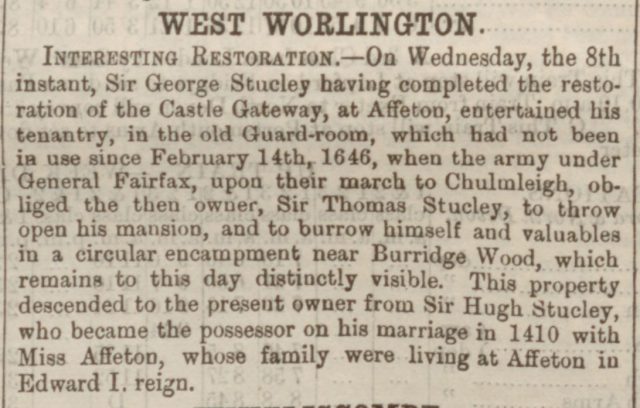
In 1858 Sir George Stucley, 1st Baronet, started work to restore the gatehouse to serve as a hunting lodge or shooting box. The gateway arch was blocked up and the moat filled in at this time. Despite announcing the works complete in 1868 , see press cutting below, the restoration work appears to have continued for a number of years as the census records for 1871 and 1881 show that the residents of the Castle were stonemasons.
Renovation work included the removal of a tree growing out of the gatehouse tower and repair to the stonework that had been damaged when a donkey, that had climbed the spiral staircase and could not be coaxed down again, was lowered on a rope.
1859
Stables
1868-1970
Shooting Lodge
For over a hundred years the Castle was used as a shooting lodge and the only permanent household members were at first, stonemasons who were no doubt working on the renovations and latterly caretakers or gamekeepers and their families.
1970-present
Family Home Once More
Press Cuttings
Restoration of the GatehouseThis piece in the North Devon Journal dated 16th September 1869 describes how the castle had been ransacked by the army of General Fairfax in 1646 and the Gatehouse, which had survived the destruction of the castle, had not been in use since that date. Sir George Stucley in 1858 had started to restore the Gatehouse as a shooting lodge and on completing the work in 1869 entertained his tenantry in the old Guard-room. It should be noted that in the booklet below produced in 1967 by John Stucley he disputes the story told in this cutting that Sir Thomas was in residence at the time of the sacking. |
|
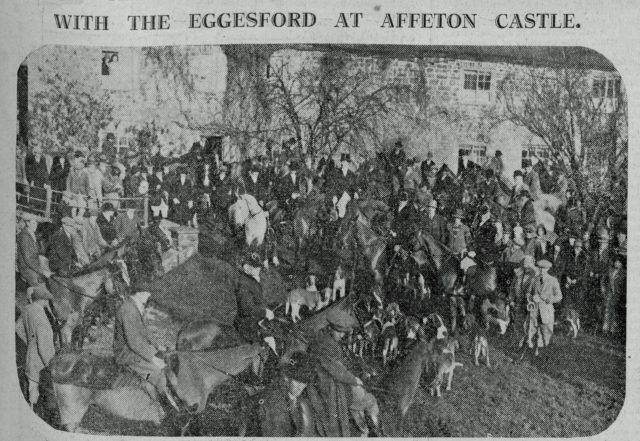 |
Eggesford Hunt at Affeton CastlePublished in the Western Times 29th January 1932, The Eggesford Hunt meeting at the Castle with the building in the background. |
Affeton Castle – A Lost Devon Village
The booklet below recounts the history of Affeton, its manor-house and its people from Saxon times to the 20th Century. It was written in 1967 by John Humphrey Albert Stucley (1916-1988) the son of Sir Hugh Nicholas Granville Stucley, 4th Baronet and Gladys Bankes, and uncle to the current owner of Affeton Castle Sir Hugh Stucley, 6th Baronet.