EWPH Home
  • Home
  • Local History
  • About Us
  • Event Calendar
  • Contact the History Group
WWII Timeline

WWII Timeline


15-Mar-1939

Germany invades Czechoslovakia

Nazi Germany invaded and occupied the Czech provinces of Bohemia and Moravia, forming the Protectorate of Bohemia and Moravia, after Slovakia declared its independence on March 14th. This action, a direct violation of the Munich Agreement, marked the end of appeasement and a significant step towards World War II.


Jun-1939

Womens Land Army (WLA) reformed

The WLA) was first established during WWI to address the shortage of male agricultural labor and was re-formed in anticipation of the Second WWII to ensure Britain’s food supply during the war. Women who joined the WLA were known as “Land Girls” and by 1943, comprised over 80,000 women.
 

1-Sep-1939

Germany invades Poland

Germany launched a surprise attack on Poland at dawn on September 1, 1939, with a force of over 1.5 million soldiers, 2,000 tanks, and nearly 900 bombers.  Nazi propagandists falsely claimed that Poland was persecuting ethnic Germans and that Poland was planning to attack Germany with its allies, Great Britain and France. 

Continue reading

3-Sep-1939

Britain and France declare war on Germany

On September 3, 1939, Britain and France declared war on Germany, two days after Germany invaded Poland, marking the official start of World War II.  The immediate cause was Germany’s invasion of Poland on September 1, 1939. Both Britain and France had previously guaranteed Poland’s borders and pledged to defend it against aggression.  
 

16-Sep-1939

Petrol Rationing

Motorists had to present their car registration book in order to collect petrol coupons from their local Post Office.

  • They were initially allowed fuel for approximately 200 miles (320 kilometers) per month. 
  • This form of ratioining was suspended from July 1942 to June 1945 and replaced with essential user coupons issued only to those with official sanction. 
  • In 1945, the basic ration was restored, about 150 miles (240 km) per month in June, increasing to 180 miles (290 km) in August.  
Continue reading

8-Jan-1940

Food Rationing

Food rationing started with butter, bacon, ham, and sugar.  By March 11, 1940, the rationing was expanded to include all types of meat. Other essential items, such as tea, jam, biscuits, breakfast cereals, cheese, eggs, lard, milk, canned and dried fruit were also rationed, mainly in the first half of 1942. Food rationing in Britain ended on July 4, 1954. 
 

10-May-1940

Churchill becomes Prime Minister
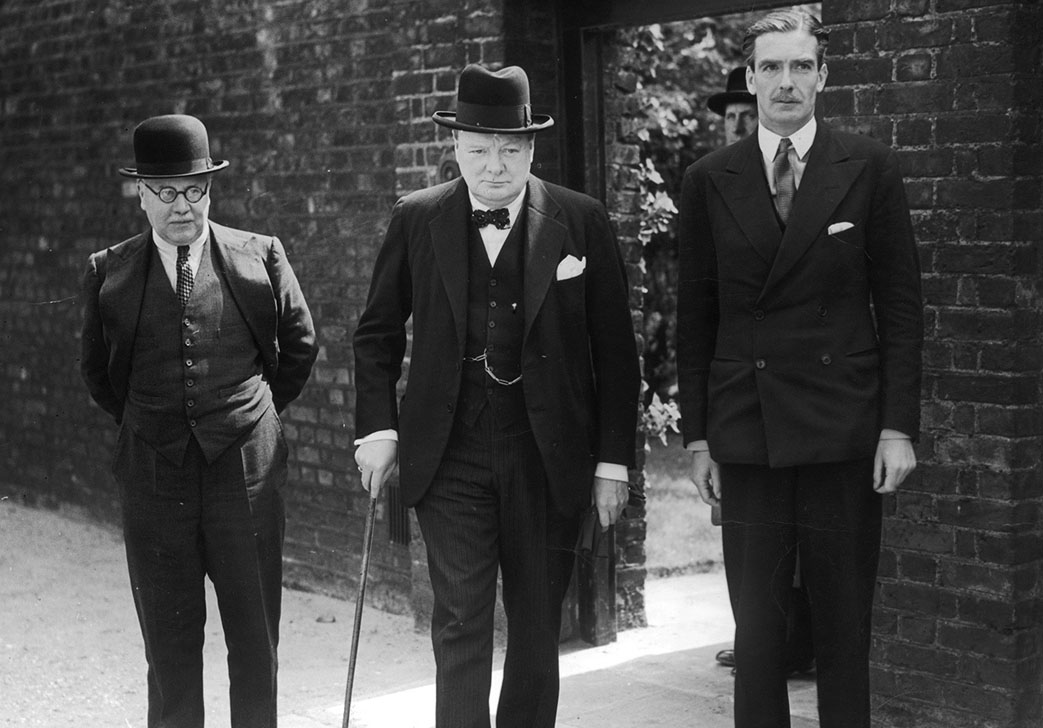
Neville Chamberlain resigned as Prime Minister of the United Kingdom, and Winston Churchill, a vocal critic of Chamberlain’s policy of appeasement, became his successor, leading a national unity government during the Second World War. 

Continue reading

14-May-1940

Home Guard Formed

The Home Guard was originally formed as the Local Defence Volunteers in 1940 and was responsible for guarding coastal areas and factories from invasion. It was disbanded in 1945.
Continue reading

26-May-1940

Operation Dynamo: Dunkirk

Operation Dynamo (the Dunkirk evacuation) was a WWII Allied military operation where over 338,000 British and Allied troops were rescued from the beaches and harbor of Dunkirk, France, between May 26 and June 4, 1940, after being trapped by German forces.
Continue reading

13-Jun-1940

East worlington hosts evacuees

At a meeting of the South Molton Rural District Council  the Clerk, Mr C. B. Willey informed those present that about 830 evacuees were expected that Thursday evening, more to follow on Friday and Saturday: East Worlington was initially expected to host 56 of the Saturday evacuees.
Continue reading

10-Jul/31-Oct 1940

Battle of Britain

The Royal Air Force (RAF) successfully defended the United Kingdom against a series of German Luftwaffe (air force) , preventing a potential invasion.  
Continue reading

27-Sep-1940

The Blitz starts

The “Blitz” is the sustained period of German bombing raids on British cities, starting in September 1940 and lasting until May 1941. The Luftwaffe focused on key cities and towns, including London, industrial centers, and portsin order to cripple Britain’s war effortand demoralize of the civilian population.  
Continue reading

7-Dec-1941

Pearl Harbor

Pearl Harbor (a U.S. Navy base in Hawaii) was  the site of a devastating surprise attack by the Imperial Japanese Navy sinking or damaging nearly 20 American naval vessels, including eight battleships, and destroying over 300 aircraft.  The attack caused he deaths of over 2,400 Americans, including civilians, and over 1,000 were wounded.
 

8-Dec-1941

Britain and US declare war on Japan

Following the Japanese attack on Pearl Harbor, both the United States and the United Kingdom declared war on Japan, marking America’s entry into World War II.  


Sep-1942

New Rector at St Mary’s

Rev Maddock appointed as new rector at St Mary’s church.
 

23-Oct-1942

Batte of El Alamein

Between 23 October and 4 November 1942 the British Eighth Army inflicted a decisive defeat on the Axis armies of Italy and Germany at El Alemain (near the western frontier of Egypt) and was the turning point of the North African campaign
 

3-Sep-1943

Italy surrenders

After Mussolini’s fall in July 1943, the new Italian government, led by Marshal Pietro Badoglio, began negotiating an armistice with the Allies which was kept secret until the Allied invasion of Italy was underway.  
 

28-Nov/1-Dec 1943

Tehran Conference

A pivotal meeting where the leaders of the Allied Powers (US President Franklin D. Roosevelt, British Prime Minister Winston Churchill, and Soviet Premier Joseph Stalin) convened to discuss military strategy and the post-war world order.  


6-Jun-1944

Operation Overlord:

Normandy Landings on D-Day

D-Day arked the start of the Allied invasion of Normandy where 130,000 Allied troops landed on the beaches of Normandy to liberate Nazi-occupied Europe.  American forces landed at Utah and Omaha beaches, and  British and Canadian forces landed at Gold, Juno, and Sword beaches.


Jun-1944

Home Guard Football Match

Worlington Home Guard plaled Lapford Home Guard at a football match at which they lost 5 goals to 2.


25-Aug-1944

Paris liberated

From August 19 to 25, 1944, the French Resistance forces and Allied troops drove out the remaining German garrison in Paris, ending four years of Nazi occupation of the French capital.  
 

Nov-1944

Plans to lay mains water to East Worlington

Devon County Council apply to parliament toestablsih North Devon Joint Water Board. North Devon Water Board Bill outlines the provision for main water supply to villages.
 

16-Dec-1944

Battle of the Bulge

Aka the Ardennes Offensive was the last major German offensive on the Western Front took place from December 16, 1944, to January 25, 1945, in the Ardennes Forest.  
 

Feb-1945

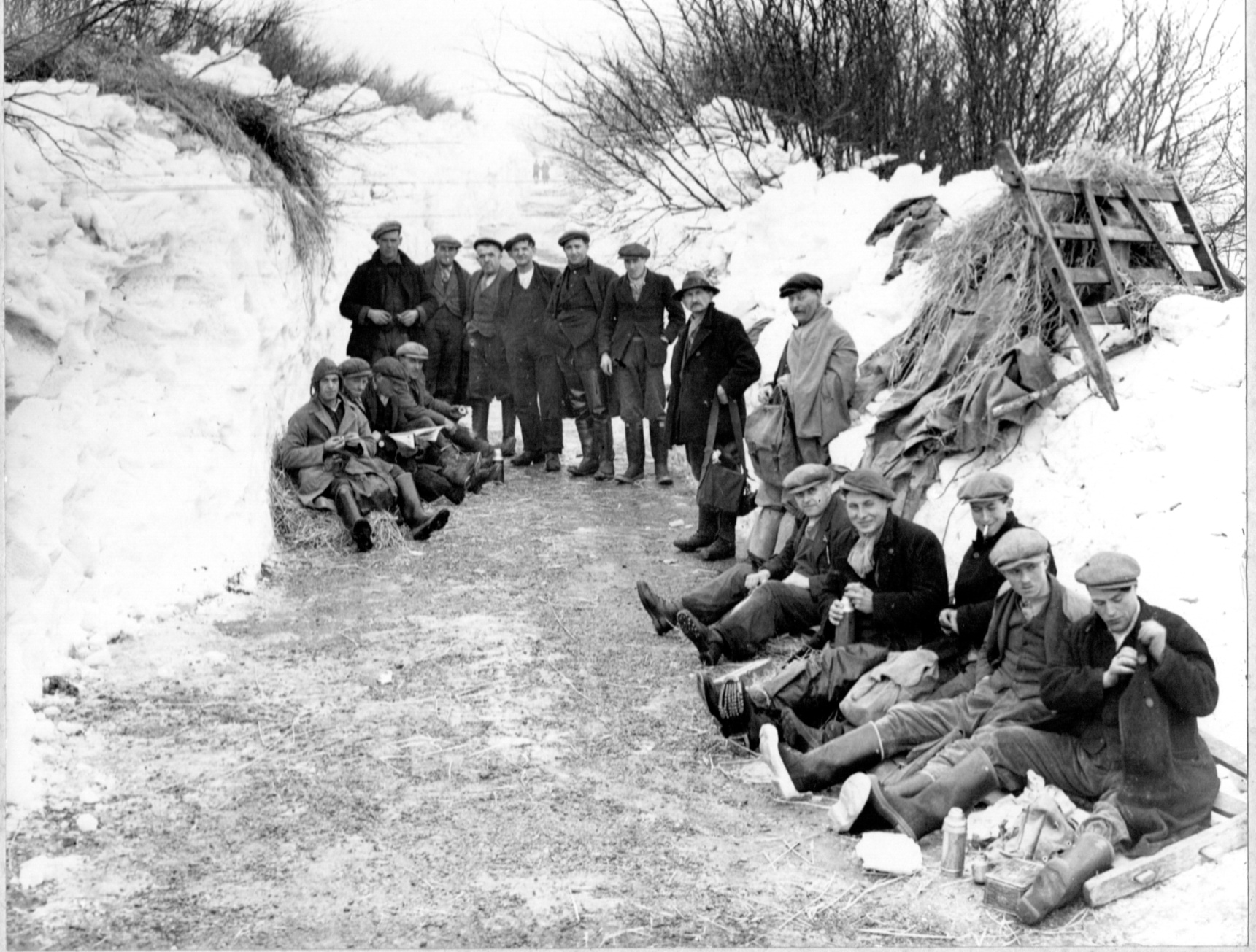
Bad weather in Worlington – heavy snow

East and West Worlington isolated due to heavy snow.
 

30-Apr-1945

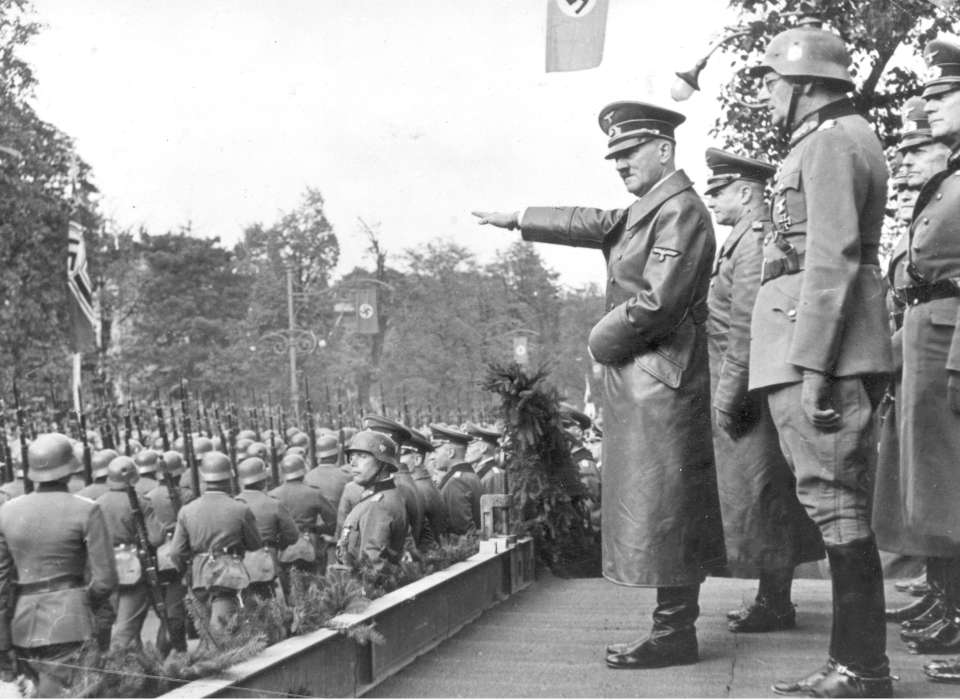
Hitler commits suicide

Hitler, chancellor and dictator of Nazi Germany, committed suicide via a gunshot to the head in the Führerbunker in Berlin after it became clear that Germany would lose the Battle of Berlin.
 

7-May-1945

Germany unconditionally surrenders

The unconditional surrender of Germany at Reims, France, and ratified in Berlin on May 8/9, meant the German armed forces would cease all hostilities, effectively ending World War II in Europe.  
 

25-Jun-1945

Major Denis Stucley withdraws from parliamentary election

In South Molton Major Denis Stucley (Conservative) withdrew as a candidate to allow George Lambert Junior (National Liberals) to stand unopposed.

Continue reading

8-May-1945

VE Day

Victory in Europe Day marks the formal acceptance of Germany’s unconditional surrender of its armed forces on and the end of all German military operations.

Read More about our VE80 Exhibition

5-Jul-1945

Churchill loses election

With the Second World War still fresh in voters’ minds, the opposition Labour Party of Clement Attlee won a landslide victory with a majority of 146 seats: George Lambert,(Liberal National) to represent South Molton Rural District Council.
 

6-Aug/9-Aug 1945

US drops atomic bomb on Hiroshima & Nagasaki

The United States dropped an atomic bomb, nicknamed “Little Boy”, on the Hiroshima, Japan.  The bomb, a uranium gun-type fission bomb was dropped from a B-29 Superfortress “Enola Gay”, piloted by Colonel Paul Tibbets. The US dropped a second atomic bomb “Fat Man” on Nagasaki, Japan. This bomb was a plutonium implosion-type nuclear weapon, the second and largest of the two nuclear weapons used in world war II and was dropped from the B-29 Superfortress “Bockscar”, piloted by Major Charles Sweeney.  
 

15-Aug-1945

Japan surrenders

The unconditional surrender of the Empire of Japan  was announced by Emperor Hirohito which fulfilled the requirements put forward by the United Kingdom, China and the United States  in the Potsdam Declaration of 26 July 1945.
 

2-Sep-1945

MacArthur accepts Japan’s unconditional surrender

The Japanese signed the Instrument of Surrender on  board the USS Missouri in Tokyo Bay which marked the unconditional surrender of the Empire of Japan to the Allied Powers; thereby ending World War II in the Pacific.


Return to 'WWII Timeline in Worlington'

History Group Confidentiality Statement

Copyright © 2026 · East Worlington Parish Hall · Registered Charity 267969 · Log in